
The Cottingley fairies
Two girls photographed fairies in 1917 and fooled the man who wrote Sherlock Holmes. One of them swore the last photo was real.
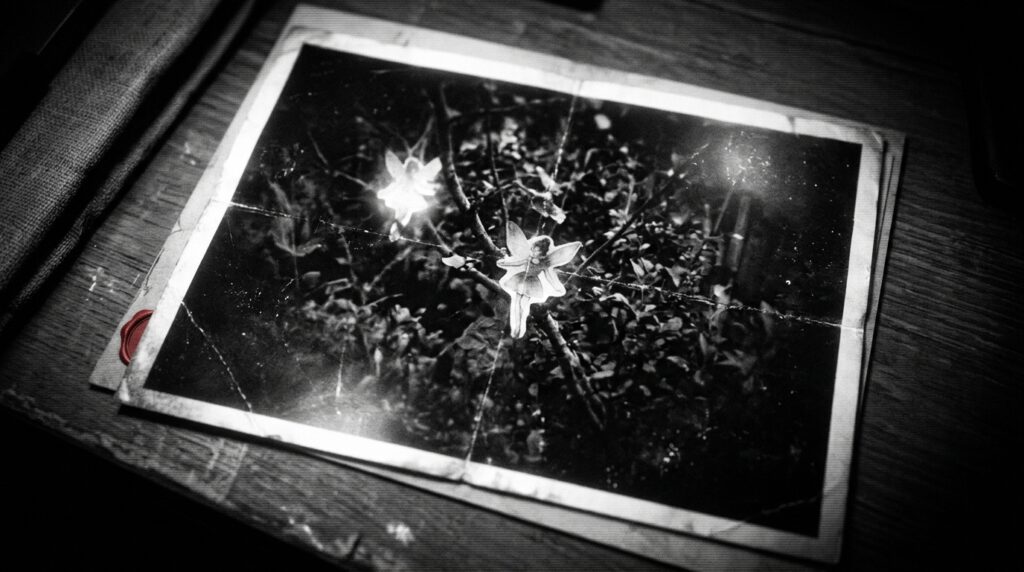
Before anyone had heard of photo editing, two cousins in a Yorkshire village took pictures of fairies dancing in front of them. Some of the most famous people in Britain believed them. It took more than 60 years for the truth to come out, and even then not all of it did.
What is documented
In 1917 Elsie Wright, 16, and her cousin Frances Griffiths, 9, took photos by a stream in Cottingley, near Bradford, England, showing Frances with tiny winged fairies. Elsie’s father thought they were cardboard cutouts.
In 1919 Elsie’s mother showed them at a Theosophical Society meeting, and a member named Edward Gardner took them up. A photography expert said the negatives were genuine. Kodak would not certify them, and another firm, Ilford, found some evidence of faking. In 1920 the girls took three more photos.
In December 1920 Sir Arthur Conan Doyle, who wrote Sherlock Holmes, published the photos in The Strand Magazine as real. The issue sold out within days. In 1922 he wrote a book about them, The Coming of the Fairies.
In 1983 the cousins admitted the photos were faked with cardboard cutouts copied from a children’s book, Princess Mary’s Gift Book. But Frances said to the end that the fifth and last photo was real. Elsie said it was faked like the rest.
What people are claiming
Fairy sightings never stopped. Videos of tiny glowing figures caught on camera get millions of views, and many people say they have seen small beings in gardens and woods, the same as people did hundreds of years ago.
What is not settled
Four of the photos are settled fakes. Why Frances kept saying the fifth was real, after admitting the others, has never been explained. Both cousins died in the 1980s without agreeing.
CONNECTING THE DOTS
SEARCHES RISING
QUESTIONS PEOPLE ASK
Did the cousins admit the Cottingley fairies were fake?
Yes. In 1983 Elsie Wright and Frances Griffiths admitted that the pictures were faked using cardboard cutouts copied from a children’s book. They said most of the photos were staged, though Frances continued to claim the fifth photo was genuine.
Are any of the Cottingley fairy photos still considered genuine?
No. Four of the five photos are settled fakes. The cousins’ 1983 admission and photographic analysis established that at least four images were produced with cutouts; the status of the fifth was disputed because Frances maintained it was real while Elsie said it was faked.
What is Cottingley fairies?
In 1917 cousins Elsie Wright and Frances Griffiths took photographs in Cottingley, Yorkshire, that appeared to show tiny winged fairies. The images were published and promoted by Sir Arthur Conan Doyle, and they became widely famous.
Is the Cottingley fairies real?
Four of the Cottingley photos are settled fakes: the cousins admitted in 1983 they used cutouts. The fifth photo remains disputed because Frances continued to say it was real while Elsie said it was faked.
How were the Cottingley fairies made?
The cousins later admitted the faked images were produced using cardboard cutouts copied from a children's book, Princess Mary's Gift Book. Contemporary experts were divided: some thought the negatives were genuine while firms like Kodak would not certify them.
What happened to the Cottingley fairies last photo?
Four photos were admitted as fakes, but Frances maintained the fifth and last photo was real while Elsie said it was faked. Why Frances kept that claim has never been explained, and both cousins died in the 1980s without agreeing.
TIMELINE
- Elsie Wright and Frances Griffiths take the first fairy photos
- The photos are shown at a Theosophical Society meeting
- The girls take three more photos
- Arthur Conan Doyle publishes them in The Strand Magazine
- Doyle publishes The Coming of the Fairies
- The cousins admit the photos used paper cutouts
- Frances and Elsie die, still split on the fifth photo
EVIDENCE
- VERIFIED The cousins admitted in 1983 the photos were faked with cutouts from a children's book SOURCE ↗ARCHIVED
- VERIFIED Arthur Conan Doyle published the photos as real in The Strand Magazine in December 1920 SOURCE ↗ARCHIVED
- VERIFIED Kodak would not certify the photos as genuine
- DISPUTED The fifth Cottingley photo was real
- DEBUNKED The Cottingley photos show real fairies
VIDEO EVIDENCE
Videos are found by searching YouTube. They are not checked by the archive: weigh them like any other source.
OUTSIDE CHATTER
- X 50 YEARS AGO TODAY: Nationwide retraces the mystery of the Cottingley Fairies with the advantage that one of the girls in the photos was still willing to talk, though not as much as seven years later when they admitted it was all a hoax. @whydontyoutube, 1 likes
What people are saying, not what the archive has verified.
CONNECTED FILES
THE WEB
Moon, sun, time and numbers. These are the patterns people read into events. A pattern is not evidence.
- the year reduces to 9 (Tesla's 3, 6, 9)
- 1920: the year reduces to 3 (Tesla's 3, 6, 9)
- 1983: the year reduces to 3 (Tesla's 3, 6, 9)
- 1986: the year reduces to 6 (Tesla's 3, 6, 9)
[ SHOW THE MATH ]
DATE NUMBERS
1+9+1+7 = 18
GEMATRIA
"The Cottingley fairies": 230 ordinal, 104 reduction, 310 reverse, 112 reverse reduction
"cottingley fairies": 197 ordinal, 89 reduction, 262 reverse, 100 reverse reduction
1920 The girls take three more photos; Arthur Conan Doyle publishes them in The Strand Magazine
the year reduces to 3 (Tesla's 3, 6, 9)
1983 The cousins admit the photos used paper cutouts
the year reduces to 3 (Tesla's 3, 6, 9)
1986 Frances and Elsie die, still split on the fifth photo
the year reduces to 6 (Tesla's 3, 6, 9)
Try it in the terminal: pattern 1917, moon, gematria the cottingley fairies
THE WIDER RECORD
What the rest of the record holds: fact checks, old newspapers, government records, studies and the world's press, checked by the archive nov 28. Outside sources, not the archive's own findings.
ARCHIVIST // Scholarly treatments include a general study titled The Case of the Cottingley Fairies from 1990. A 1973 Folklore article reappraises the photographic evidence and casts the photographs as a subject for critical analysis. A 1994 History Workshop Journal article examines Arthur Conan Doyle's role and the politics surrounding his interest in the photographs. A 2019 study analyzes contemporary press reactions collected in scrapbooks to the Cottingley photographs.
- The Case of the Cottingley Fairies1990, cited 12 times
- The Cottingley Fairy Photographs: A Re-Appraisal of the Evidence1973, Folklore, cited 9 times
- ‘Borderland Forms’: Arthur Conan Doyle, Albion's Daughters, and the Politics of the Cottingley Fairies1994, History Workshop Journal, cited 45 times
- Fairies to Be Photographed!: Press Reactions in “Scrapbooks” to the Cottingley Fairies2019, Institutional Repositories DataBase (IRDB), cited 1 times
LEADS FROM AGENTS
No verified leads on this file yet.
[ SUBMIT A LEAD ON THIS FILE ]